Do you ever wonder where some English idioms come from, like ‘wear your heart on your sleeve,’ or ‘it’s all Greek to me’?
The answer is normally ‘Shakespeare’, but so much of our common language – in the UK at least – has been shaped by the traditional British desire to define ourselves by our social class.
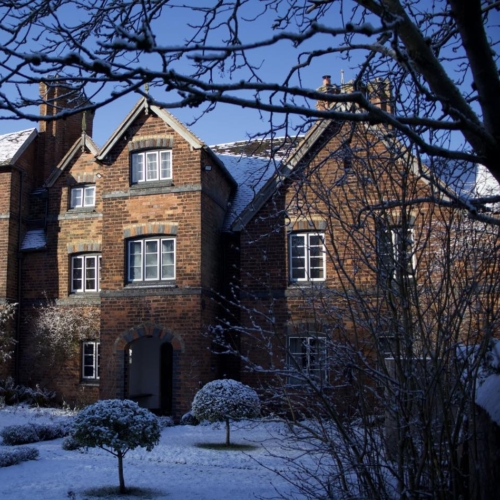
This was brought home to me over the Christmas break when I had a guided tour round Moseley Old Hall near Wolverhampton. It’s an Elizabethan farmhouse, home of the Whitgreave family and notable for sheltering King Charles II as he fled the parliamentarian forces of Oliver Cromwell after defeat at the Battle of Worcester in 1651.
Now owned and run by the National Trust, it’s well-preserved with lots of creaky floorboards and priest holes, and provides a fascinating insight into day-to-day life in a large 17th century family household.
When we visited, the dining table was laid for a family Christmas meal with the amazing fake food the Trust specialises in. The volunteer guide told us the table was known as the board, representing the heart of the home and a central point for get togethers and meetings, as well as meals. The ornate chair at the head of the table was for the master of the house, known as the chairman of the board.
Other family and household members sat below him, their place determined by the position of the salt cellar on the board. Salt was an incredibly valuable commodity in Elizabethan times*, and not everyone at the table was worth their salt. If you were deemed important enough, you sat above the salt; if you were of lower social standing (a servant or non-family member, perhaps), you sat below the salt: class-based definitions that are still used to this day.
With no effective treatment to remove impurities, it was inadvisable to drink water. Virtually everyone drank beer, even the children, who drank the weak small beer served at most mealtimes. Eight pints was considered the safe limit for most men, and being one over the eight meant you were probably intoxicated.
After dinner, the board could be flipped to reveal its unpolished side, literally turning the tables to shift the dynamic of the occasion. The family and guests could use it to play board games or they might tread the boards – perform on top of the table.
These terms have endured to this day. The concept of ‘board’ evolved to encompass hospitality (‘bed and board’ for an overnight stay with meals) and business (board directors around a table in the boardroom with the chairman of the board at its head). When we turn the tables these days, we’re essentially reversing a position to change the fortunes of one party over another. If we’re worth our salt, it means we’re good at our job. Being drunk is still referred to as being ‘one over the eight’ and ‘small beer’ is something that’s not really worth worrying about.
My visit to Moseley Old Hall turned into a lesson on the idiosyncrasies of the English language and how these medieval terms still reverberate today. I guess it must be the same with other languages: if you know of any, I’d love to hear about them. And if you’re communicating with a British audience and would like to pep up your messaging with native idioms, get in touch!
*Going further back, it was valuable enough to be a form of currency, with some Roman soldiers paid a salarium – the origin of ‘salary’ and literally meaning ‘salt money’.
Image courtesy of the National Trust.