I recently came across a LinkedIn post from Anna Appleton Clayton describing how variations in typefaces can make it harder for children to learn to read.
She made a good point. If you’re learning to read and your ‘q’ has a tick at the end of the downstroke, seeing it without one can be confusing. And ‘a’ and ‘g’ can be completely different characters from one typeface to the next.
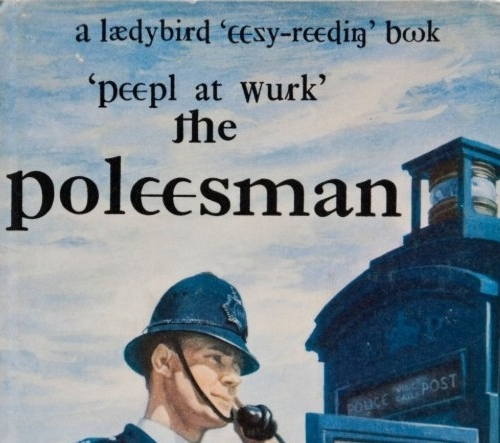
That being said, today’s kids have it easy. When I was at a British primary school in the early 1970’s, we were subjected to one of those crazy educational experiments that happen from time to time, and learned to read using a system called ITA – the Initial Teaching Alphabet. This comprised more than 40 characters – a lot more than the 26 everyone from Shakespeare to Winston Churchill had managed with perfectly well in previous centuries.
ITA was designed by the grandson of the inventor of shorthand. He thought that the phonetic irregularity of English was the main reason children had difficulty learning to read. His solution combined consonants and vowels along with joined consonants – one character for the ‘ng’ sound in ‘sing’ for example – long vowels and diphthongs, some of which barely resembled any letter of the alphabet. You can see the ITA alphabet here.
We even had a range of reading books with titles that looked like ‘Jeezuz the helper’, ‘Peepl at wurk: the poleesman’ and ‘Puppiz and kittenz’.
Because ITA was based upon received pronunciation (RP) – the way the Queen and dinner-jacketed BBC announcers spoke – children from distinctly-accented regions of the UK found it quite a challenge. As a Brummie, I didn’t say ‘ice’ the same way they did on the radio. And Geordies from Newcastle didn’t pronounce ‘book’ the same way I did.
But the biggest problem was that once ITA had well and truly programmed your five-year-old brain, you were expected to unlearn it all a couple of years later, and start writing and reading the same way everyone else did, including your mom and dad and older siblings.
It’s a miracle I learned to read at all, let alone make a living from writing in English.
This Guardian article sums up the madness of ITA, if you’re interested.
If you need your message explained clearly in language your target audience will understand and respond to, pleez caul mee.